Thursday, June 27, 2024
6 Yoga Poses That Will Save You from Sitting All Day
Tired of sitting all day? These six yoga poses will not only help you stretch and relieve tension but also improve your overall health and well-being. Find out how to incorporate them into your daily routine!
In today's fast-paced world, many of us find ourselves glued to our desks for hours on end. Whether you're working from home or in an office, sitting all day can take a toll on your health. From back pain to tight hips, the negative effects of prolonged sitting are numerous. But don't worry—there's a solution! By incorporating yoga into your daily routine, you can combat these issues and improve your overall well-being. In this blog post, we'll explore six yoga poses that can help counteract the effects of sitting all day.
The Hidden Dangers of Sitting All Day
Why Sitting Is the New Smoking
You've probably heard the phrase "sitting is the new smoking," but what does it really mean? Studies have shown that prolonged sitting can lead to serious health issues such as heart disease, diabetes, and even premature death. When you sit for long periods, your muscles become inactive, leading to poor blood circulation and a slower metabolism. This inactivity can also cause weight gain and increase your risk of developing chronic diseases.
The Impact on Your Muscles and Joints
When you sit all day, your muscles and joints pay the price. Your hip flexors become tight, your glutes weaken, and your lower back can become strained. These imbalances can lead to poor posture and chronic pain, making it difficult to perform everyday activities. Over time, the lack of movement can also lead to joint stiffness and reduced flexibility.
Mental Health Consequences
It's not just your physical health that suffers from prolonged sitting; your mental health can take a hit too. Sitting for extended periods can lead to feelings of fatigue, stress, and even depression. Lack of movement reduces the production of endorphins, the body's natural feel-good chemicals, leaving you feeling sluggish and unmotivated.
The Benefits of Yoga for Office Workers
Yoga Enhances Flexibility and Strength
One of the most significant benefits of yoga is its ability to enhance flexibility and build strength. By practicing yoga regularly, you can stretch tight muscles and strengthen weak ones, helping to correct imbalances caused by sitting. Improved flexibility and strength can also reduce your risk of injury and make it easier to perform daily tasks.
Improved Posture and Alignment
Yoga encourages proper alignment and posture, which can help counteract the negative effects of sitting. By focusing on your breath and engaging your core muscles, yoga helps you become more aware of your body's alignment. This awareness can translate to better posture throughout the day, reducing strain on your muscles and joints.
Stress Relief and Mental Clarity
Yoga is not just about physical benefits; it also provides mental and emotional relief. The practice of deep breathing and mindfulness can help reduce stress and improve mental clarity. By taking a few minutes each day to practice yoga, you can calm your mind, improve focus, and boost your overall mood.
Do These Yoga Poses to Combat Sitting All Day
1. Forearm Plank
Strengthen Your Core and Shoulders
The forearm plank is a powerful pose that targets your core, shoulders, and back. To perform this pose, start by lying on your stomach with your forearms on the ground. Lift your body off the ground, keeping your forearms and toes on the mat. Engage your core and hold the position for 30 seconds to a minute.
Benefits for Office Workers
This pose helps strengthen the muscles weakened by prolonged sitting, particularly the core and shoulders. A strong core supports your lower back, reducing pain and improving posture. Additionally, the forearm plank engages your entire body, making it an excellent full-body workout.
Modifications and Tips
If you're new to planking, you can start with your knees on the ground to reduce the intensity. Make sure to keep your body in a straight line from head to heels and avoid letting your hips sag. Breathe deeply and focus on maintaining proper form throughout the pose.
2. Low Lunge Pose with Locust Arms
Stretch Your Hip Flexors and Strengthen Your Back
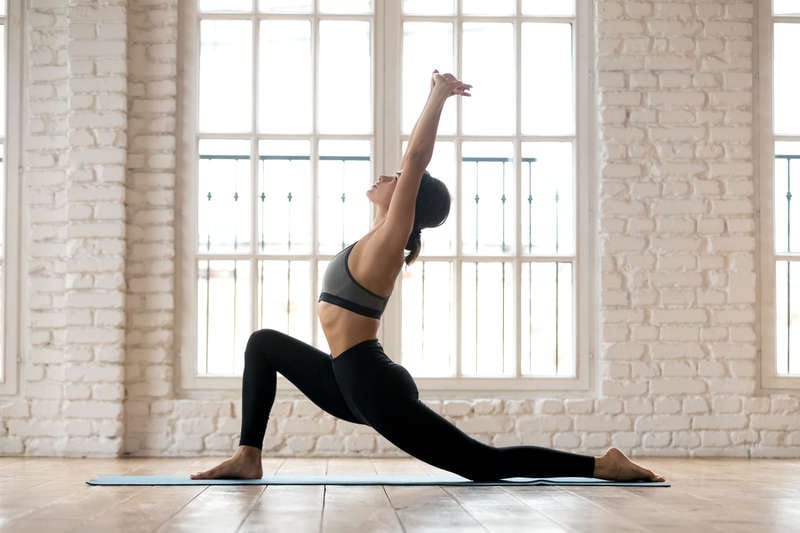
The low lunge pose with locust arms is a fantastic way to stretch tight hip flexors and strengthen your back muscles. Begin in a low lunge position with your right foot forward and your left knee on the ground. Extend your arms behind you, interlacing your fingers if possible. Lift your chest and gaze forward, holding the pose for several breaths before switching sides.
Benefits for Office Workers
This pose helps open up the hips, which can become tight from sitting all day. It also strengthens the back muscles, improving posture and reducing lower back pain. By incorporating this pose into your routine, you can alleviate discomfort and enhance your overall mobility.
Modifications and Tips
If you find it challenging to balance in this pose, place your hands on your hips or use yoga blocks for support. Focus on keeping your front knee aligned with your ankle and avoid letting it extend past your toes. Breathe deeply and enjoy the stretch in your hip flexors and chest.

3. Thread the Needle
Release Tension in Your Shoulders and Upper Back
Thread the needle is a gentle twist that targets the shoulders and upper back. Start on your hands and knees in a tabletop position. Slide your right arm under your left arm, bringing your right shoulder and ear to the ground. Keep your left hand on the mat for support or extend it overhead for a deeper stretch. Hold the pose for several breaths before switching sides.
Benefits for Office Workers
This pose is excellent for releasing tension in the shoulders and upper back, which can become tight from hunching over a desk. The gentle twist also improves spinal flexibility and promotes relaxation. Practicing threading the needle can help alleviate discomfort and increase upper body mobility.
Modifications and Tips
If you have limited flexibility, you can place a pillow or folded blanket under your shoulder for support. Focus on keeping your hips level and avoid letting them shift to one side. Breathe deeply and enjoy the gentle stretch in your shoulders and upper back.
4. Fish Pose
Open Your Chest and Strengthen Your Back
The fish pose is a heart-opening backbend that stretches the chest and strengthens the back. Lie on your back with your legs extended and your arms by your sides. Press your forearms into the ground and lift your chest, arching your back and resting the crown of your head on the mat. Hold the pose for several breaths, focusing on opening your chest and breathing deeply.
Benefits for Office Workers
Fish pose helps counteract the effects of hunching over a desk by opening the chest and stretching the front of the body. It also strengthens the muscles in the back, promoting better posture and reducing upper back pain. Incorporating this pose into your routine can help you feel more open and energized.
Modifications and Tips
If you find it challenging to lift your chest, you can place a folded blanket or yoga block under your upper back for support. Make sure to keep your neck relaxed and avoid putting too much weight on your head. Breathe deeply and focus on opening your chest and lengthening your spine.
5. Cat-Cow with Reverse Wrist Stretch
Improve Spine Mobility and Stretch Your Wrists
Cat-cow with reverse wrist stretch is a dynamic combination that improves spinal mobility and stretches the wrists. Start on your hands and knees in a tabletop position with your wrists turned inward so your fingers point towards your knees. Inhale and arch your back, lifting your chest and tailbone (cow pose). Exhale and round your spine, tucking your chin and tailbone (cat pose). Continue flowing between these two poses for several breaths.
Benefits for Office Workers
This pose helps improve the flexibility and mobility of the spine, which can become stiff from sitting all day. The reverse wrist stretch also helps alleviate tension in the wrists and forearms, which are often strained from typing. Practicing cat-cow with reverse wrist stretches can help you feel more limber and relaxed.
Modifications and Tips
If the reverse wrist stretch is too intense, you can perform the cat-cow movement without turning your wrists inward. Focus on moving your spine smoothly and synchronizing your breath with your movements. Breathe deeply and enjoy the gentle stretch in your wrists and spine.

See other posts like this one:










Wednesday, June 05, 2024
17 Egg Substitutes That'll Transform Your Cooking and Baking Recipes