

Monday, June 24, 2024
Loosen Up! 7 Essential Hip Flexor Stretches and Exercises for Fitness Enthusiasts
Don't let tight hip flexors hold you back from reaching your fitness goals. Try these 7 stretches and exercises to improve flexibility and prevent injuries for fitness enthusiasts of all levels.
Introduction
Do you spend hours at a desk or behind the wheel? Or maybe you're a fitness enthusiast who loves cardio but struggles with tight hips? If so, hip flexor stretches are your new best friend. Tight hip flexors can lead to pain and injury, hindering your mobility and overall performance. In this comprehensive guide, we'll explore why hip flexors are crucial, how they impact your movement, and seven essential stretches and exercises to keep them in top shape.
What Are Hip Flexors?
Hip flexors are a group of muscles located around the front of your pelvis. They connect the lower spine to the hips and thighs, playing a pivotal role in your ability to move. The primary muscles involved are the iliopsoas, tensor fasciae latae, and rectus femoris.
These muscles work together to enable you to lift your knees, bend at the waist, and perform various other movements. When your hip flexors are in good shape, you can move freely and without pain. However, when they become tight or overworked, they can cause discomfort and limit your range of motion.
Understanding the anatomy and function of your hip flexors is the first step in addressing any issues you might have. By knowing which muscles are involved and how they work, you can better target them with specific stretches and exercises.
How Do Hip Flexors Help You Move?
Your hip flexors are vital for various movements, from walking and running to biking and climbing stairs. They help stabilize your pelvis and lower spine, ensuring smooth and efficient motion. When you lift your knee or bend forward, your hip flexors are hard at work.
These muscles are also crucial for maintaining balance and stability. When you stand or walk, your hip flexors work to keep your pelvis level and aligned. This helps prevent falls and injuries, especially during high-impact activities like running or jumping.
In addition to their role in movement, hip flexors also contribute to your overall posture. Tight hip flexors can pull your pelvis forward, leading to a condition known as anterior pelvic tilt. This can cause lower back pain and other issues if not addressed.
How Do You Know if Your Hip Flexors Are Tight (and Why It Matters)?
Recognizing the signs of tight hip flexors is essential for preventing pain and injury. Common symptoms include lower back pain, hip pain, and difficulty standing up straight. You might also notice a reduced range of motion in your hips, making it harder to perform everyday activities.
Tight hip flexors can result from prolonged sitting, overuse, or lack of stretching. When these muscles become tight, they can pull on your pelvis and lower spine, causing discomfort and limiting your mobility.
If left unaddressed, tight hip flexors can lead to more severe issues, such as muscle imbalances and joint problems. By identifying the signs early and incorporating regular stretches and exercises, you can keep your hip flexors in optimal condition.
How to Get Started with Hip Flexor Stretches and Hip Flexor Exercises
Getting started with hip flexor stretches and exercises is simple and requires minimal equipment. The key is to be consistent and listen to your body. Begin with gentle stretches and gradually increase the intensity as your flexibility improves.
Start by warming up with a few minutes of light cardio, such as walking or jogging. This will get your blood flowing and prepare your muscles for stretching. Then, move on to the following exercises, holding each stretch for 15-30 seconds and repeating 2-3 times on each side.
By incorporating these stretches and exercises into your routine, you'll improve your flexibility, reduce pain, and enhance your overall mobility. Remember to breathe deeply and relax into each stretch, avoiding any sudden or jerky movements.
Stretch 1: Standing Hip Flexor Stretch
The standing hip flexor stretch is a great way to target your hip flexors while also engaging your core and improving your balance.
- This stretch is ideal for beginners and can be done anywhere, making it a convenient addition to your daily routine.
- Hold the stretch for 15-30 seconds, then switch sides.
- Tilt your pelvis forward slightly and engage your core.
- Step one foot back and bend your front knee, keeping your back leg straight.
- Stand up straight with your feet hip-width apart.
Stretch 2: Kneeling Hip Flexor Stretch
This stretch targets the iliopsoas and is particularly effective for relieving tightness in the hips and lower back.
- The kneeling hip flexor stretch is excellent for deeper muscle engagement and can be easily modified to increase intensity.
- Hold for 15-30 seconds, then switch sides.
- Push your hips forward gently, feeling the stretch in your hip flexors.
- Kneel on one knee with your other foot in front, forming a 90-degree angle.
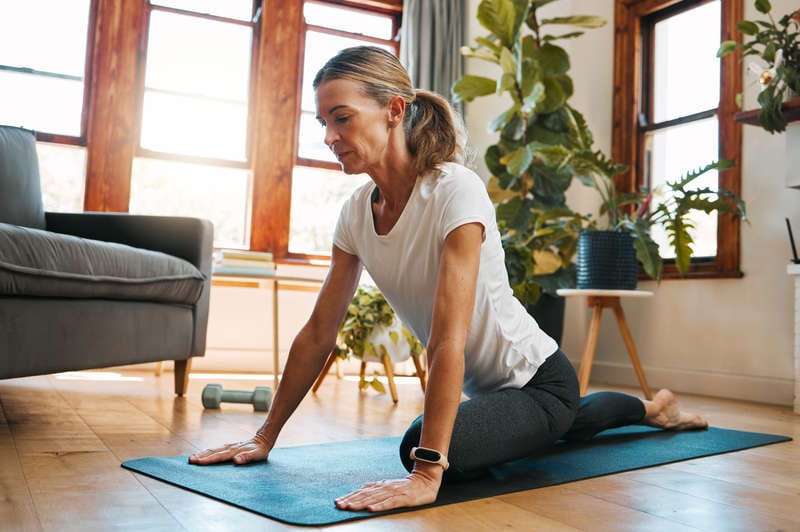
Stretch 3: Pigeon Pose
Pigeon Pose, a popular yoga stretch, targets the hip flexors and glutes, making it a great addition to your stretching routine.
- Pigeon Pose not only stretches the hip flexors but also enhances overall hip mobility and flexibility.
- Lean forward and rest on your forearms or chest, holding for 15-30 seconds.
- Extend your other leg straight back, lowering your hips toward the floor.
- Start in a plank position, then bring one knee forward, placing it behind your wrist.
Stretch 4: Butterfly Stretch
The butterfly stretch is a simple yet effective way to target the inner thighs and hip flexors.
Sit on the floor with your feet together and your knees bent out to the sides.
- This stretch is perfect for loosening the hips and improving flexibility in the inner thighs.
- Hold the stretch for 15-30 seconds, breathing deeply.
- Hold your feet with your hands and gently press your knees toward the floor.
- Sit on the floor with your feet together and your knees bent out to the sides.

Exercise 1: Hip Bridge
The hip bridge exercise strengthens the glutes and hamstrings while also stretching the hip flexors.
- Perform 10-15 repetitions, gradually increasing as you build strength.
- Hold for a few seconds, then lower your hips back down.
- Lift your hips toward the ceiling, squeezing your glutes.
- Lie on your back with your knees bent and feet flat on the floor.
Exercise 2: Lunge
Lunges are a compound exercise that engages multiple muscle groups, including the hip flexors, glutes, and quadriceps.
- Aim for 10-12 repetitions on each side, focusing on proper form and control.
- Repeat on the other side.
- Push through your front heel to return to the starting position.
- Stand up straight and step one foot forward, lowering your back knee toward the floor.
Exercise 3: Leg Raises
Leg raises target the hip flexors and lower abs, making them an excellent addition to your workout routine.
- Perform 10-15 repetitions, gradually increasing as your core strength improves.
- Lower them back down without touching the floor.
- Lift your legs toward the ceiling, keeping them straight.
- Lie on your back with your legs extended and hands by your sides.
Exercise 4: Seated Leg Extension
This exercise targets the hip flexors and quadriceps, helping to improve strength and mobility.
- Repeat 10-12 times on each side, focusing on controlled movements.
- Hold for a few seconds, then lower your leg back down.
- Extend one leg straight out, keeping your foot flexed.
- Sit on the edge of a chair with your feet flat on the floor.
Conclusion
Keeping your hip flexors in top shape is crucial for maintaining mobility, preventing pain, and enhancing overall performance. By incorporating these stretches and exercises into your routine, you'll improve your flexibility, strength, and posture.
Remember, consistency is key. Make hip flexor stretches and exercises a regular part of your fitness regimen, and you'll reap the benefits in no time. For more personalized advice and tips, consider consulting with a physical therapist or fitness expert.
Ready to take your fitness to the next level? Sign up for our newsletter to receive exclusive content, workout plans, and expert advice straight to your inbox. Let's get moving!

See other posts like this one:












Friday, June 07, 2024
Understanding Overeating and Undereating: Recognizing the Signs and How to Address Them



