Monday, November 11, 2024
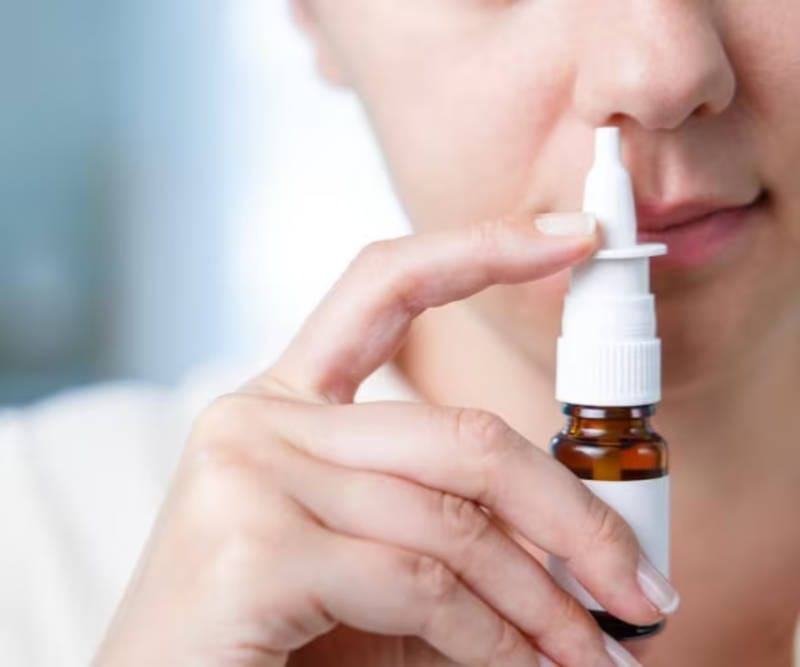
New Nasal Spray Could Help Block Viruses
Discover how a new, drug-free nasal spray, PCANS, could block viruses like COVID-19 and the flu at their entry point, providing a potential first line of defense against respiratory infections.
A new nasal spray might be more effective at stopping the spread of respiratory viruses, such as the flu and COVID-19, than masks, according to recent research.
This spray uses safe, inactive ingredients to trap viruses in the nose, preventing them from infecting people, the study’s authors explain.
"We designed a non-drug formula that blocks viruses in three ways," said Nitin Joshi, one of the study’s senior authors and an assistant professor at Brigham and Women’s Hospital in Boston.
Joshi explained that the nasal spray creates a gel-like layer in the nose that catches respiratory droplets, traps the viruses, and neutralizes them, stopping infection before it starts.
The researchers have named the spray Pathogen Capture and Neutralizing Spray, or PCANS.
Since most viruses enter the body through the nose, this spray offers a first line of defense. While vaccines prepare the immune system to fight off an infection, they can’t stop it at the entry point.
"The COVID-19 pandemic has shown us how quickly respiratory viruses can impact society," said Jeffrey Karp, co-senior author and a professor at Brigham and Women’s. "Besides COVID, we still deal with the flu seasonally."

Using a 3D-printed model of a human nose, the team demonstrated that the spray captured double the amount of droplets compared to natural mucus.
Lead researcher John Joseph noted, "PCANS forms a gel that’s a hundred times stronger than natural mucus, creating a solid barrier. It blocked almost 100% of all viruses and bacteria tested, including influenza, COVID-19, RSV, adenovirus, and others."
Tests in mice showed promising results. A single dose of the spray stopped a deadly dose of flu virus from reaching the lungs, and the mice showed no harmful immune responses, such as inflammation.
"In our mouse studies, the PCANS spray provided complete protection, unlike the untreated group," said Yohannes Tesfaigzi, another co-senior author and a professor at Brigham and Women’s.
The next step is to test the spray in humans. The researchers are also exploring its potential to block allergens.
The study was recently published in the journal Advanced Materials.

See other posts like this one:



Monday, June 24, 2024
Loosen Up! 7 Essential Hip Flexor Stretches and Exercises for Fitness Enthusiasts







Monday, June 24, 2024
Dance Your Way to Fitness The Ultimate Guide to Hip-Hop Cardio Workouts

Sunday, June 23, 2024
Unleashing Your Hidden Power Understanding Relative Strength in Fitness

Sunday, June 23, 2024
Elevate Your Strength - When You Should Increase Your Weights in the Gym